The parts of a performance
Kapa haka explained
What kapa haka is, who performs it, the song and dance forms you may hear named, and how the national festival fits in, as an aid to listening.
Reserve your place at the performance ↗Quick answer
Kapa haka names the action songs of Māori and the groups that perform them. One performance runs several kinds of song and dance together, among them waiata tira, whakaeke, waiata-ā-ringa, haka, poi and whakawātea. The groups are linked by family, tribe, school or another association, and a national competition, Te Matatini, has run since 1972.
What the words mean
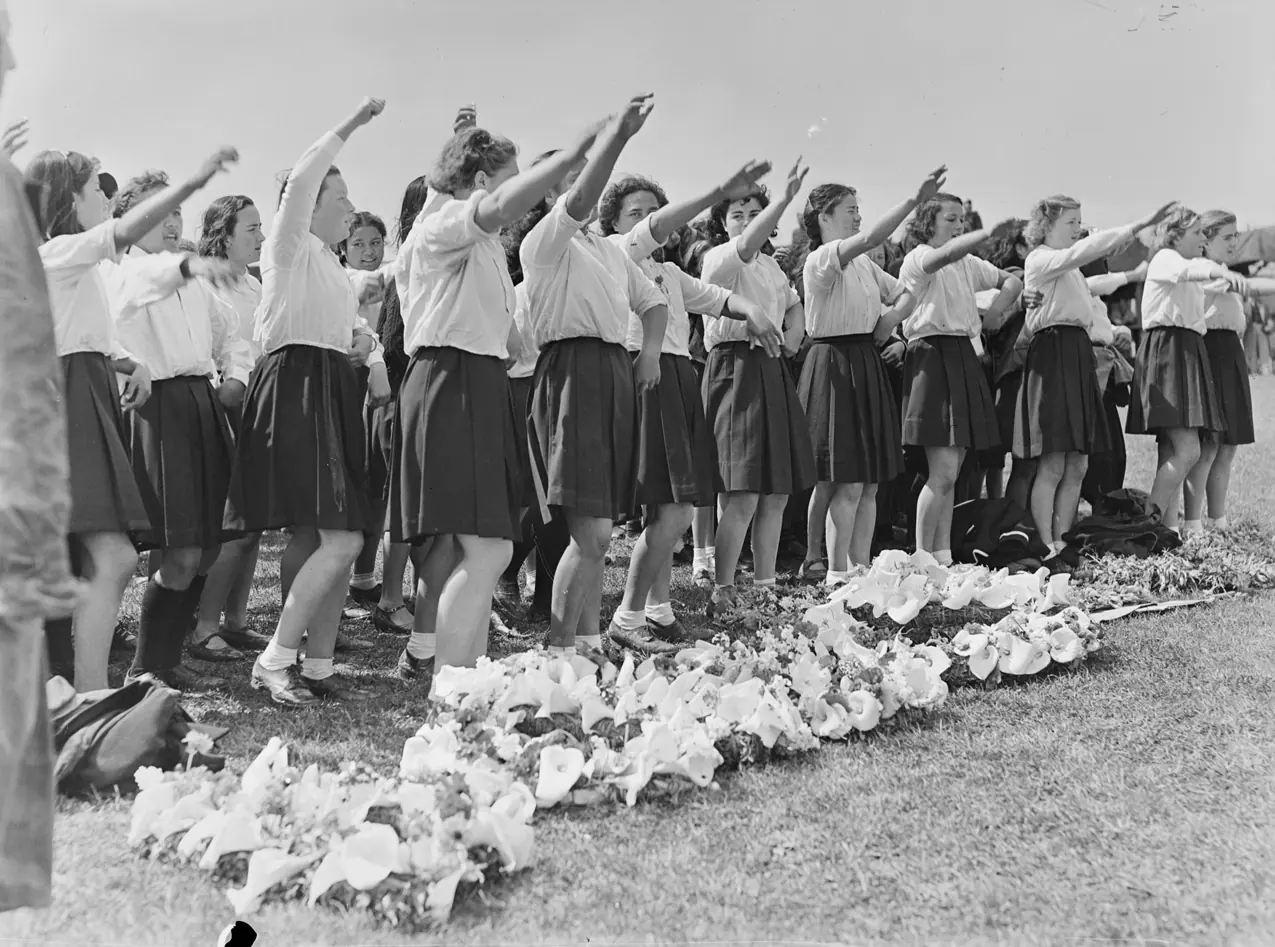
The term kapa haka covers the action songs of Māori and the groups that sing them. Read word by word, it means group, kapa, and dance, haka. It is an important avenue for Māori people to express and showcase their heritage and cultural identity through song and dance. Modern kapa haka traces back to pre-European times, where it developed from traditional forms of Māori performing art: haka, mau rākau (weaponry), poi and mōteatea (traditional Māori songs).
How a performance is built
A kapa haka group builds its piece from a suite of songs and dances, spanning several kinds of Māori music and dance, joined into one whole. The usual types are the warm-up song, the entrance song, the action song, the haka, old-style singing, poi and a closing song, and each type may appear more than once. Performers are largely synchronised, with action, timing, posture, footwork and sound moving together. The museum's session is its own programme, so use these forms as a guide to listening, not a running order.
The songs: waiata tira, whakaeke, waiata-ā-ringa
Waiata tira are choral pieces used to warm up the voices and introduce the group to the audience, in a manner that is generally light and positive. Whakaeke are also choral pieces, often used to comment on a social issue of the day or to commemorate someone, or simply as the entrance song. Waiata-ā-ringa, literally songs of hands or arms, are action songs, in which arm and hand actions embellish and reinforce the sung poetry. They feature the wiri, the trembling of the hands, and the song poetry is completely in Māori.
Poi and the sound of the hands
Poi involve swinging balls attached to cords, in synchrony, in a variety of figures and rhythms, while the performers sing a song. The sound of the poi striking the hands is an important part of the musical accompaniment. In the usual account, poi have their origins in the precolonial practice of training with poi to improve agility, and today they are used to showcase grace and dexterity. Watching the hands is half of the pleasure, because the swing of the cords and the sound of the poi are timed together.
The haka and the closing song
Haka are best described as challenges. They are used to make a point, honour someone or something, tell a story or express an emotion, and they are performed by both men and women. They are vocal performances with rhythmic declamation, and the facial expression called pūkana, literally glaring. Whakawātea are choral pieces used to farewell the audience or make a final point before departing the stage. The guide to the haka explains why Māori scholars reject the idea that haka are only war dances.
Read next: The haka explained
Who performs, and the national festival
Kapa haka groups are mixed and range from several people to dozens. They may or may not wear costume, and the people in a group are linked in some way, by extended family group, tribe, school or another association. A few performers have particular roles, such as the kaitataki, the leaders. The sole musical instruments are the guitar, the pūtatara conch shell, the sounds of poi and rākau, and body percussion. Te Matatini, the national festival, takes its name from the words for many faces, and the first festival was held in 1972.
Frequently asked questions
What does kapa haka mean?
Read word by word it means group, kapa, and dance, haka, and it names Māori action songs and the groups that sing them.
Is kapa haka only the haka?
No. The haka is one type inside a suite of songs and dances that also includes entrance songs, action songs, poi and a closing song.
What is Te Matatini?
The national organisation that fosters and protects traditional Māori performing arts and runs the national kapa haka festival, named Te Matatini, meaning many faces.
Sources